
Do your gums bleed when you brush or floss? While occasional gum bleeding can happen, frequent bleeding gums may be a sign that your gums need extra care. Poor oral hygiene, plaque buildup, aggressive brushing, vitamin deficiencies, and gum inflammation can all contribute to bleeding gums.
The good news is that several natural remedies and healthy habits may help support gum health and reduce irritation. In this guide, we’ll explore simple, natural ways to care for your gums and promote a healthier smile.
Why Do Gums Bleed?
Before trying remedies, it’s important to understand the possible causes of bleeding gums.
Common causes include:
- Plaque buildup along the gumline
- Gingivitis (early-stage gum disease)
- Brushing too hard
- Infrequent flossing
- Vitamin C deficiency
- Vitamin K deficiency
- Hormonal changes
- Smoking or tobacco use
If bleeding is severe, persistent, or accompanied by pain and swelling, consult a dental professional.
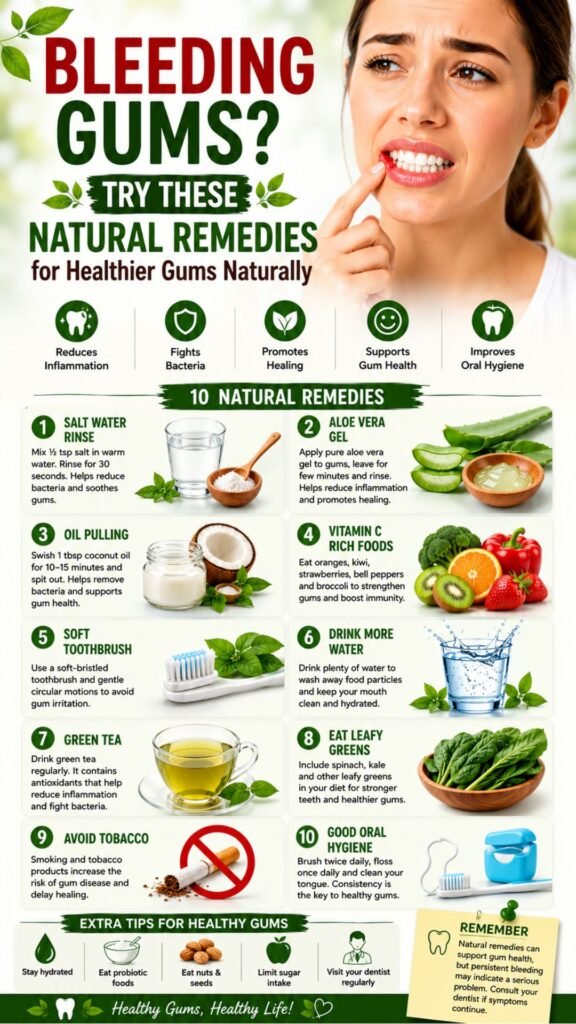
1. Rinse with Warm Salt Water
Salt water is one of the simplest home remedies for irritated gums.
Benefits:
- Helps cleanse the mouth
- Supports healing
- May reduce gum discomfort
- Helps remove bacteria
How to Use:
Mix ½ teaspoon of salt into a glass of warm water. Swish gently for 30 seconds and spit out. Repeat 1–2 times daily.
Want to Take Your Oral Health to the Next Level?
Discover this all-natural solution that may help support stronger teeth, healthier gums, and a brighter smile — without harsh chemicals.
Natural • Safe • Easy Daily Support 🌿
2. Try Aloe Vera Gel
Aloe vera is well known for its soothing properties.
Benefits:
- May help calm irritated gums
- Supports oral hygiene
- Provides a cooling effect
How to Use:
Apply a small amount of pure aloe vera gel to the affected gums. Leave for several minutes before rinsing.
3. Oil Pulling with Coconut Oil
Oil pulling is an ancient oral care practice.
Benefits:
- Helps remove bacteria
- Supports fresher breath
- Promotes overall oral cleanliness
How to Use:
Swish one tablespoon of coconut oil in your mouth for 10–15 minutes before brushing. Spit into a trash can and rinse thoroughly.
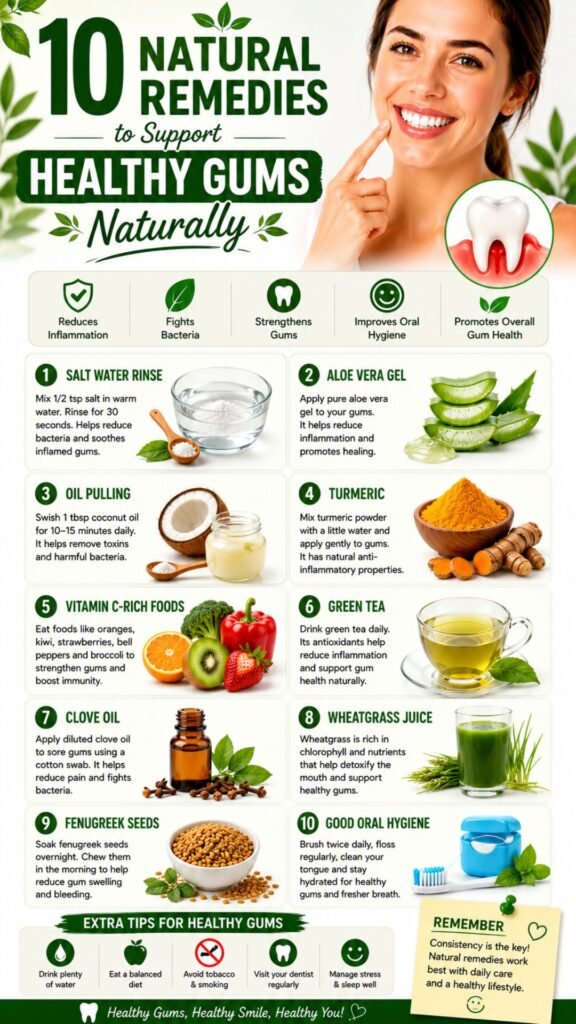
4. Increase Vitamin C Intake
Vitamin C plays an important role in gum health.
Vitamin C-Rich Foods:
- Oranges
- Strawberries
- Kiwi
- Bell peppers
- Broccoli
- Pineapple
Adding more vitamin C-rich foods to your diet may help support healthy gums.
5. Use a Soft-Bristled Toothbrush
Many people accidentally damage their gums by brushing too aggressively.
Tips:
- Use a soft-bristled brush
- Brush gently in circular motions
- Avoid excessive pressure
- Replace your toothbrush every 3 months
Gentle brushing can help reduce gum irritation.
6. Drink More Water
Water supports oral health in several ways.
Benefits:
- Helps wash away food particles
- Supports saliva production
- Reduces dry mouth
- Helps maintain a cleaner mouth
Aim to stay hydrated throughout the day.
7. Green Tea for Gum Health
Green tea contains antioxidants called catechins.
Potential Benefits:
- Supports healthy gums
- Helps maintain oral hygiene
- Promotes overall wellness
Enjoy one or two cups of unsweetened green tea daily.
8. Eat More Leafy Greens
Leafy greens provide vitamins and minerals important for oral health.
Good Choices:
- Spinach
- Kale
- Lettuce
- Swiss chard
These nutrient-rich foods can support healthy gums and teeth.
9. Avoid Tobacco Products
Smoking and tobacco use are strongly associated with gum problems.
Why Quitting Helps:
- Supports gum healing
- Improves circulation
- Reduces oral health risks
- Helps maintain fresher breath
Avoiding tobacco is one of the best things you can do for your gums.
10. Improve Your Daily Oral Hygiene Routine
The most effective natural remedy is a consistent oral care routine.
Looking for a Gentler Mouthwash?
Many alcohol-based mouthwashes may leave your mouth feeling dry. A natural alcohol-free mouthwash may help support:
Fresh • Gentle • Everyday Oral Care 🌿
Healthy Gum Checklist:
✅ Brush twice daily
✅ Floss once daily
✅ Clean your tongue
✅ Drink water regularly
✅ Eat nutrient-rich foods
✅ Visit your dentist regularly
Small daily habits often make the biggest difference over time.
Foods That Support Healthy Gums
Consider adding these foods to your diet:
- Apples
- Carrots
- Celery
- Yogurt
- Cheese
- Nuts
- Leafy greens
- Citrus fruits
These foods provide nutrients that support oral health.
When to See a Dentist
Natural remedies can support gum health, but they are not a replacement for professional care.
Seek dental advice if you experience:
- Persistent bleeding
- Swollen gums
- Gum recession
- Tooth pain
- Loose teeth
- Signs of infection
Early treatment can help prevent more serious problems.
Want Fresher Breath & Healthier Gums Naturally?
Many people are now adding ProDentim Oral Probiotics to their daily routine to help support:
Natural Oral Wellness Support 🌿
Final Thoughts
Bleeding gums are often a sign that your gums need more attention. Fortunately, simple habits such as improving oral hygiene, eating a nutrient-rich diet, staying hydrated, and using natural remedies like salt water rinses and aloe vera may help support healthier gums.
By making small improvements to your daily routine, you can take positive steps toward healthier gums, fresher breath, and a stronger smile.
Disclaimer
This article is for informational purposes only and does not provide medical or dental advice. Always consult a qualified dental professional regarding any oral health concerns.